Two Days at BrightonSEO Spring 2026: A Squarespace Designer on the Stand
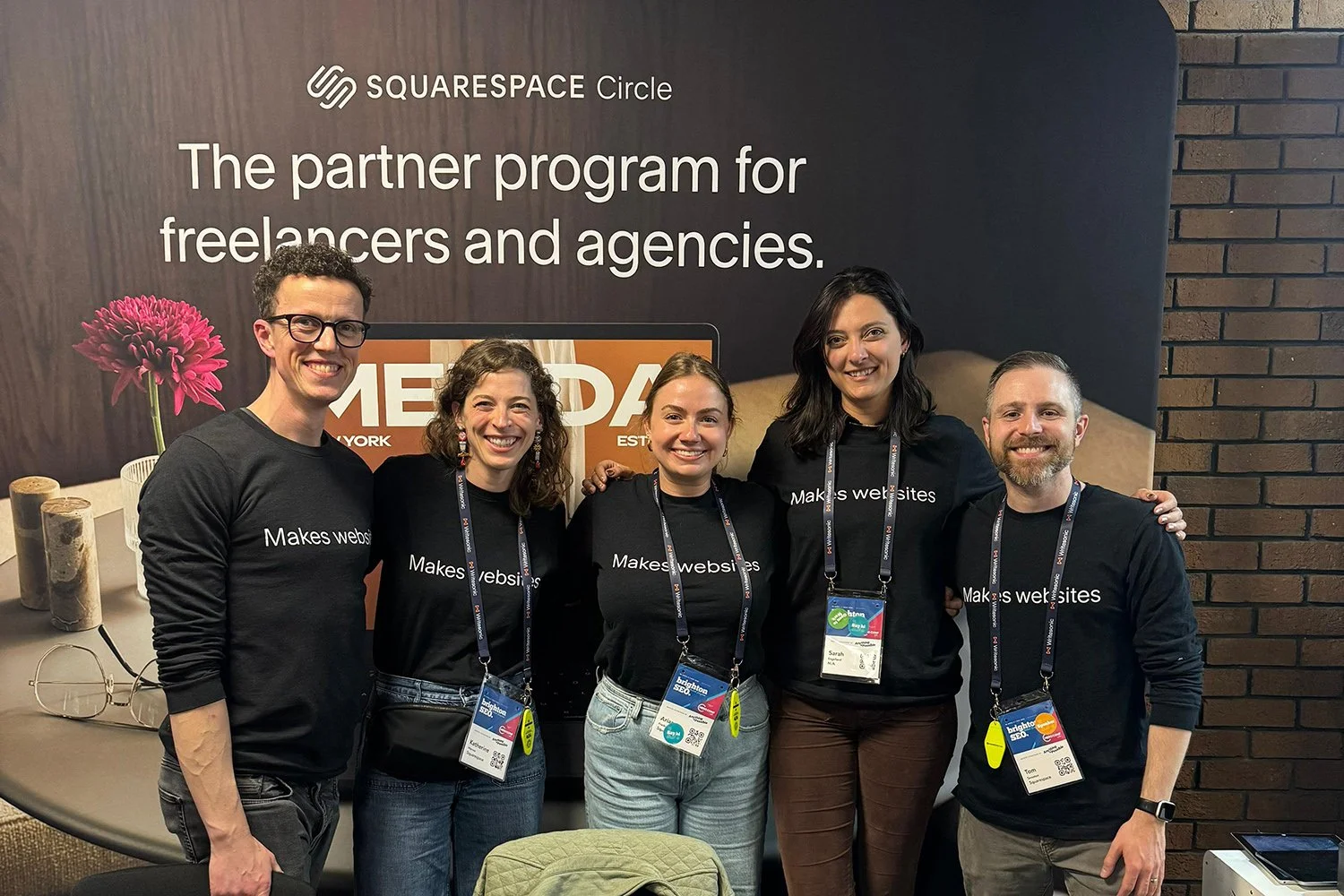
There's a particular feeling that comes from standing behind a Squarespace booth at the world's largest search marketing conference. Picture it: thousands of SEOs in The Brighton Centre, most of them flush with opinions about AI Overviews, GEO, knowledge graphs and the death of the blue link, and a steady flow of them walking up to ask if Squarespace can actually do SEO.
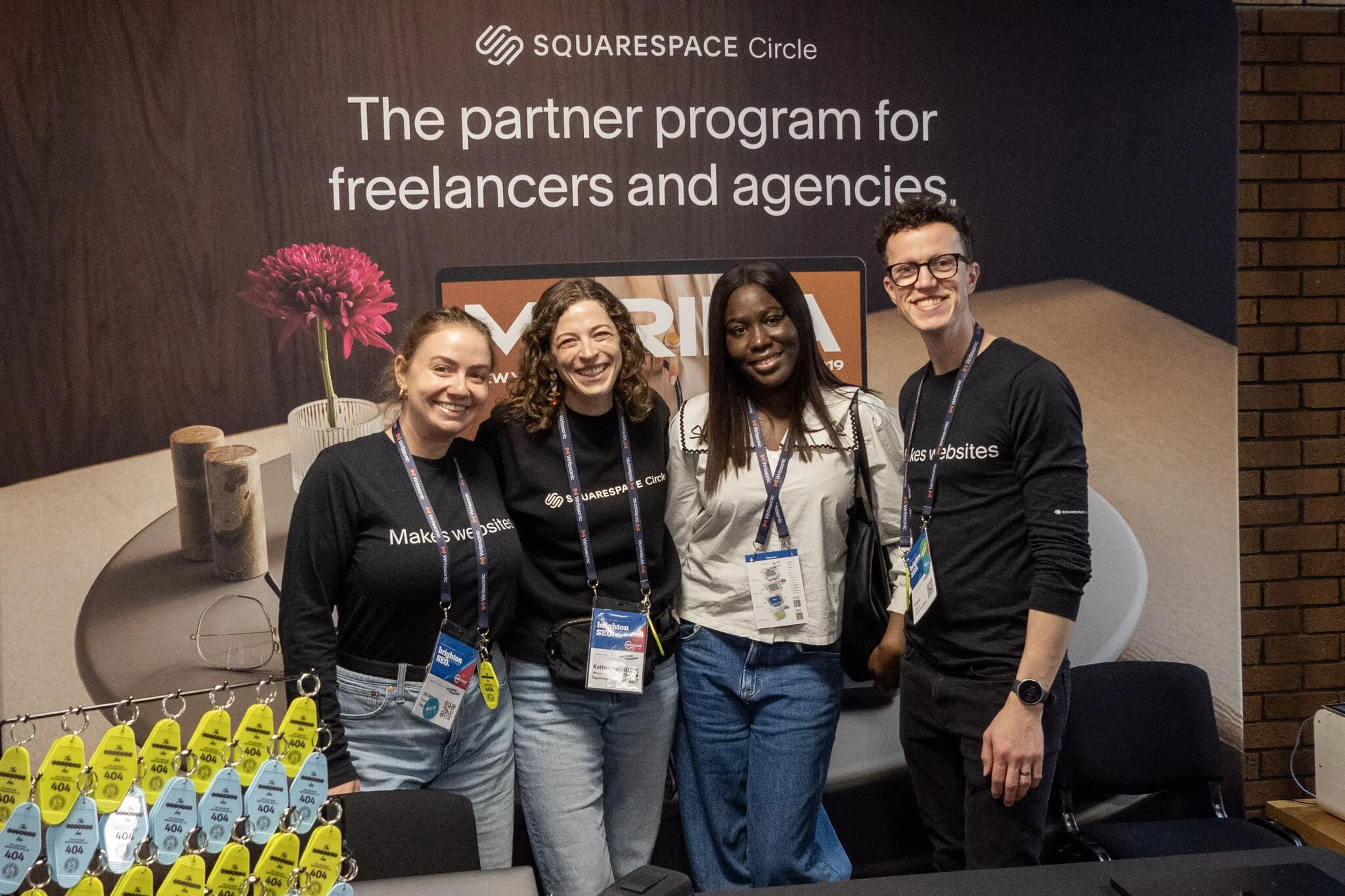
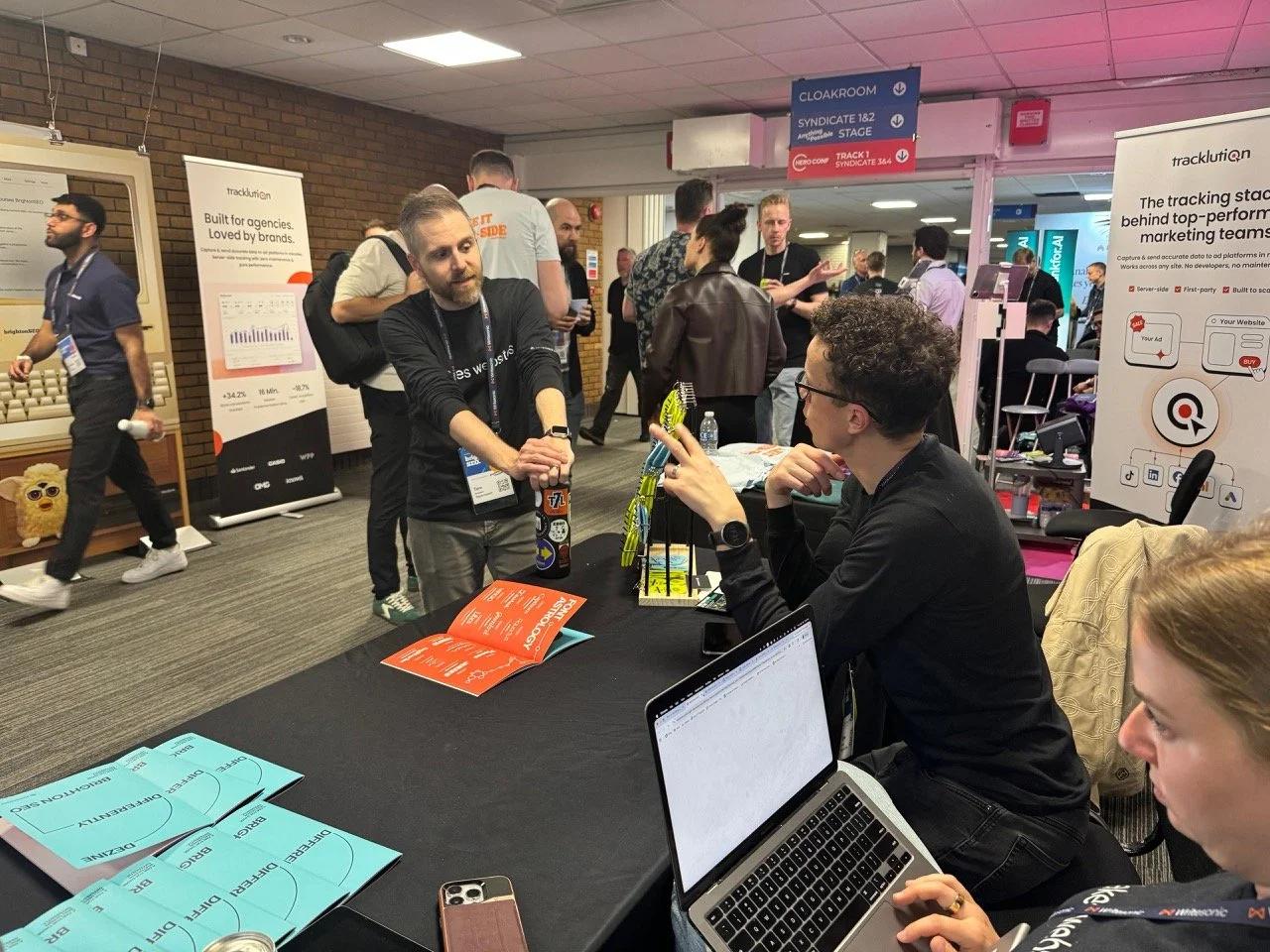
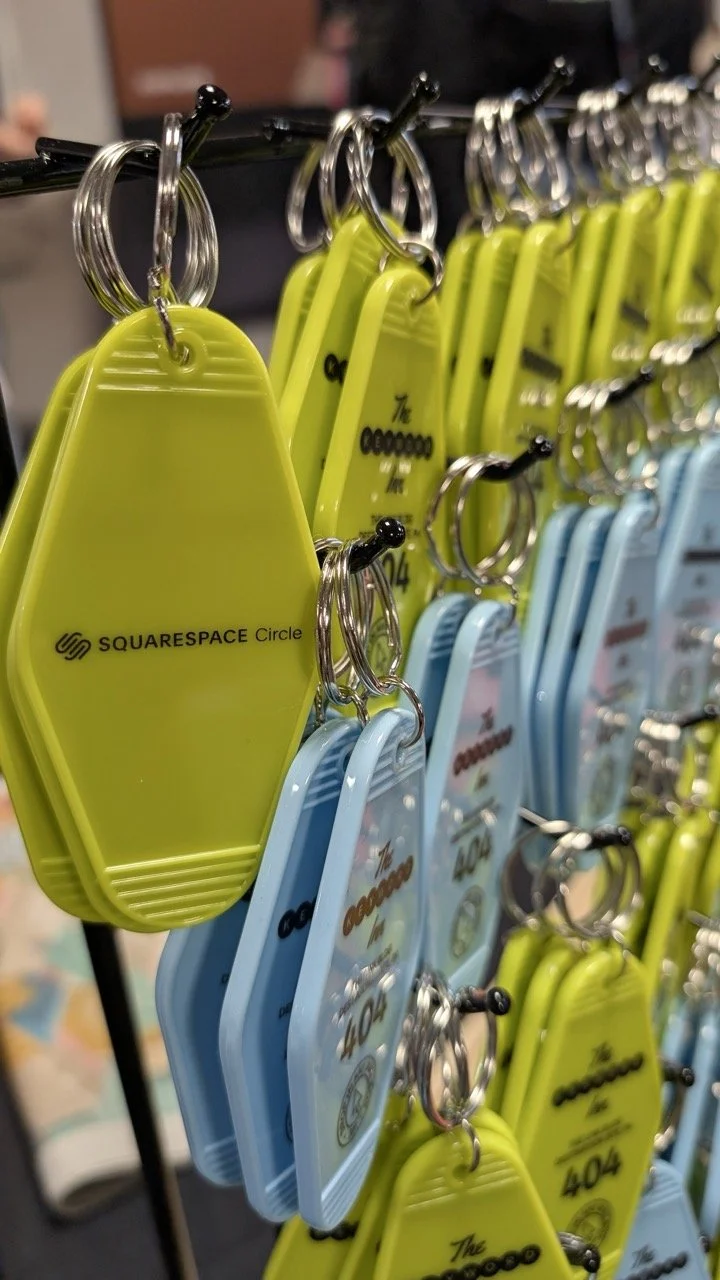
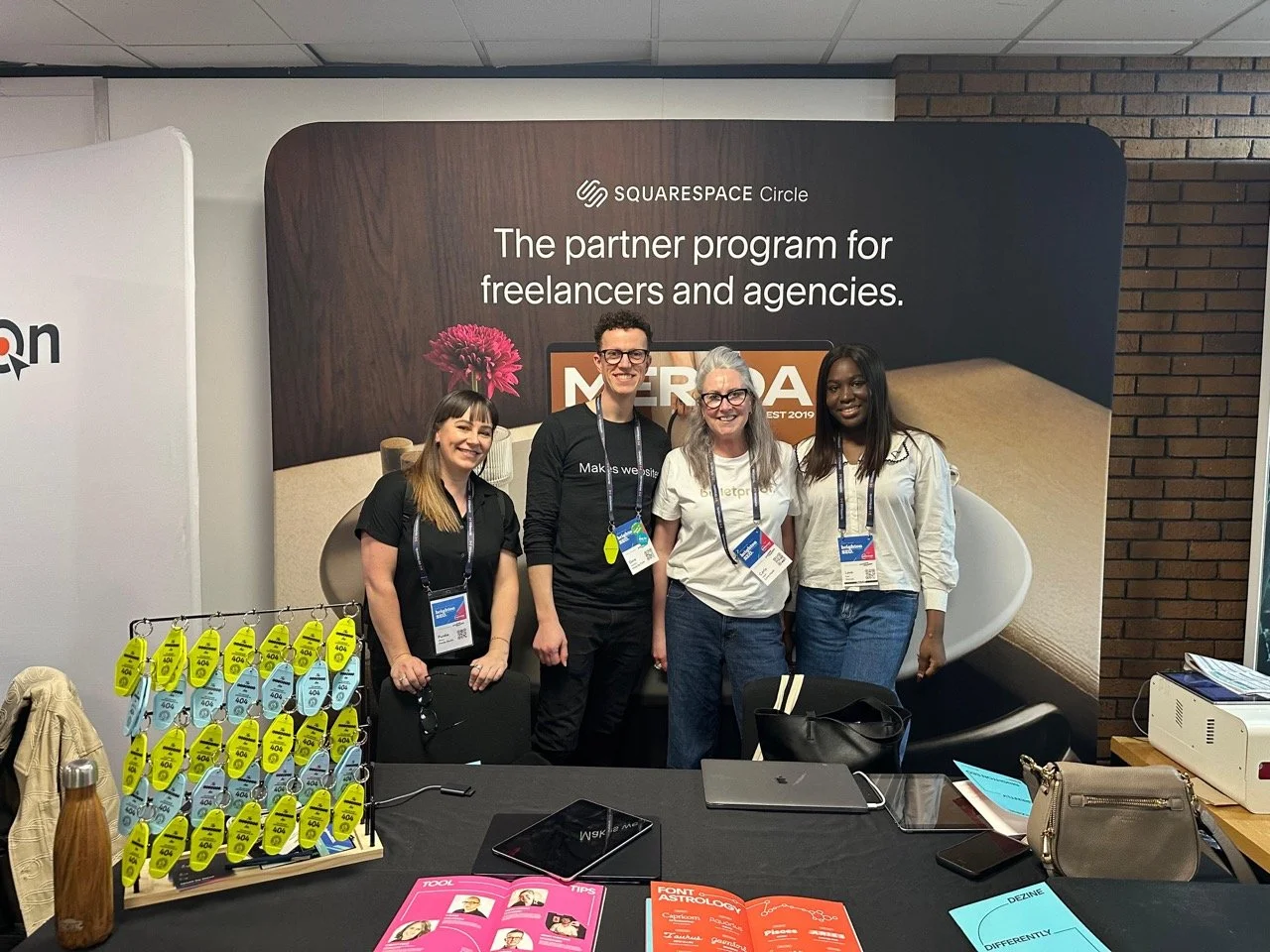
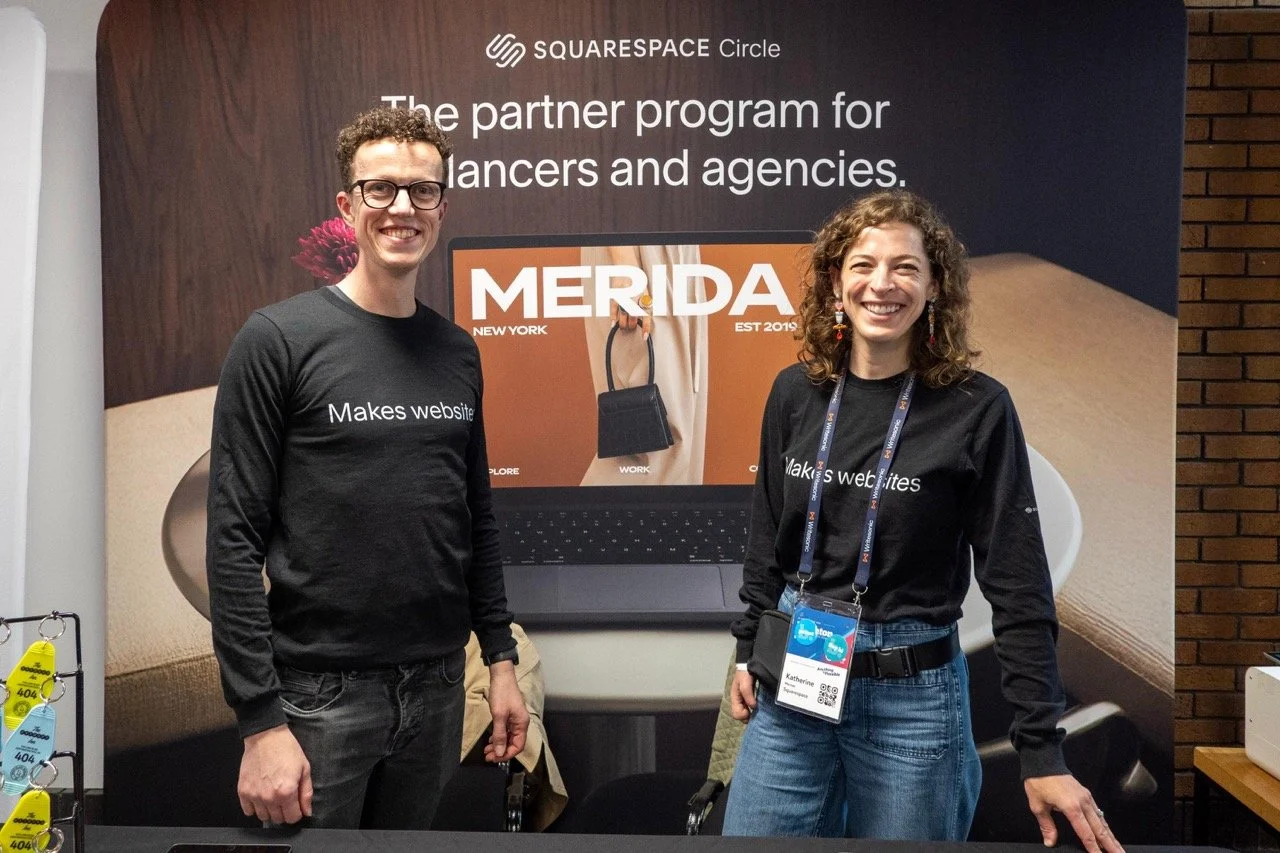
This is my recap of BrightonSEO Spring 2026, written from a slightly unusual vantage point. Not from a notebook in Auditorium 1, but from behind a stand as part of the Squarespace Circle presence at booth 49. I caught fragments of talks between conversations, picked up the hallway chatter, and spoke to a lot of SEO professionals across two solid days. Here's what I took away.
The setup
For anyone who's never been: BrightonSEO ran 30 April to 1 May at the Brighton Centre. Six stages running in parallel across two solid days. The closing keynote in Auditorium 1 at 5pm Friday was Dr. Pete Meyers from Moz, "The Infinite Tail: Keyword Research for AI", connecting his last decade of work on keyword research to where prompt research and AI visibility are heading.
I missed Pete's keynote. I was on the stand. More on that in a minute.
The mood, though, I didn't miss. The energy was buzzy and largely optimistic. AI was no longer a side topic anyone was nervously skirting. It was the topic, but in a "right, how do we actually use this" way rather than a doom-y one.
You only had to glance at the agenda to feel it. By my count, somewhere north of 18 talks across the two days had AI explicitly in the title or session theme. Whole tracks were given over to it: AI and Society, AI and Consumer Behaviour, AI Tools and Workflows, AI and Brand Authority, AI and Brand Citations, AI Impact, Understanding AI Behaviour.
This wasn't AI as a subplot. This was AI as the spine of the entire programme.
And refreshingly, almost none of it was hype. The talks were grounded in real data, real campaigns, real failures. That's always been BrightonSEO's strength, and it was on full display.
Why I was there
A bit of context. A few weeks before BrightonSEO, I was named the Squarespace London Lead Community Partner, which essentially means I help support and grow the Circle community in London on Squarespace's behalf. So when I say I was on the stand, that was one of the reasons. Helping represent Circle, talking to designers and SEOs about the platform, and being part of the Squarespace presence at the event.
The conversations broke down roughly into three buckets, on rotation all day:
The sceptics. Working SEOs, often with a slightly raised eyebrow. "Can Squarespace actually do SEO properly?" The honest answer, and one I never got tired of giving, is yes, it can, and the people asking are often using assumptions from five or six years ago. One person I spoke to genuinely hadn't realised how good a Squarespace site could be for their business. They'd assumed WordPress was the only credible option for anything approaching enterprise. That conversation alone made the trip worthwhile.
The "help me" crowd. Business owners and marketers who'd inherited a Squarespace site that wasn't working as well as it could, and wanted to know if it was salvageable. (Almost always: yes.)
The curious designers. Other freelancers and small studios, some on Squarespace, some on other platforms, wondering what Circle does, how it works, and whether it's worth joining. If that's you reading this now, the short answer is yes, it's worth it. You can join Circle here, (for free) and once you're in, the London community is one I'd genuinely recommend being part of.
The other moment that stuck with me was a lady who didn't realise quite how easy it is to add custom schema to Squarespace via the CMS. We talked through it in about three minutes. They walked away with a small but immediate thing they could do for every site they touched from now on. That's the part of these conversations I enjoy most. Not selling anything, just clearing up assumptions and pointing people at the next useful thing.
The talks I actually saw: Brand and Entity SEO
Between booth shifts on Thursday morning, I made it into Auditorium 2 for the 9:30 session, Brand and Entity SEO, moderated by Dominic Woodman. Four back-to-back 20-minute talks, and I caught the two I most needed to: Genie Jones and Tom Smeaton.
Genie Jones, Entities Speak Louder Than Words: Getting Actionable Data for AI Visibility
Genie is the Knowledge Graph Manager at Waikay and InLinks, and her talk was about getting actionable data for AI visibility through entity-level understanding rather than keyword-level thinking. The argument, distilled: AI systems don't reward you for stuffing the right phrase onto a page. They reward you for being clearly identifiable as a thing, a brand, a person, a service, a place, that the knowledge graph already understands.
This one reinforced a lot of what I already do for clients without realising I had a name for it. Clean schema, properly structured About pages, consistent naming across the web, sameAs links to Wikipedia and other authoritative sources where they exist. None of it is new. What Genie gave me was the language to sell it. Walking up to a client and saying "we should improve your schema markup" sounds like homework. Saying "we need to make sure AI knows who you are, and right now it doesn't have enough signals to be confident" lands very differently.
That's the talk I'll be quietly stealing from for the next year.
A useful conversation between sessions
Between sessions I had a really good conversation with someone from Ahrefs that picked up exactly where Genie's talk left off. We got onto schema, and specifically the idea of layering multiple schema.org types on a single site rather than relying on just one in isolation.
Most Squarespace sites I see have, at most, a basic Organisation or Article schema sitting on its own. The more sophisticated approach is to combine types properly: Organisation plus LocalBusiness plus Service plus Person plus FAQPage plus BreadcrumbList, connected with @id references so search engines and AI tools can read them as one coherent picture of the business rather than a handful of disconnected fragments.
It's a small technical shift with a big interpretive payoff. The more clearly you describe the relationships between things on your site (this business, run by these people, offering these services, in these locations), the more confidently AI tools can cite you. It's the practical execution of Genie's argument. Make the entity legible.
This is going straight into how I scope schema work for clients from now on.
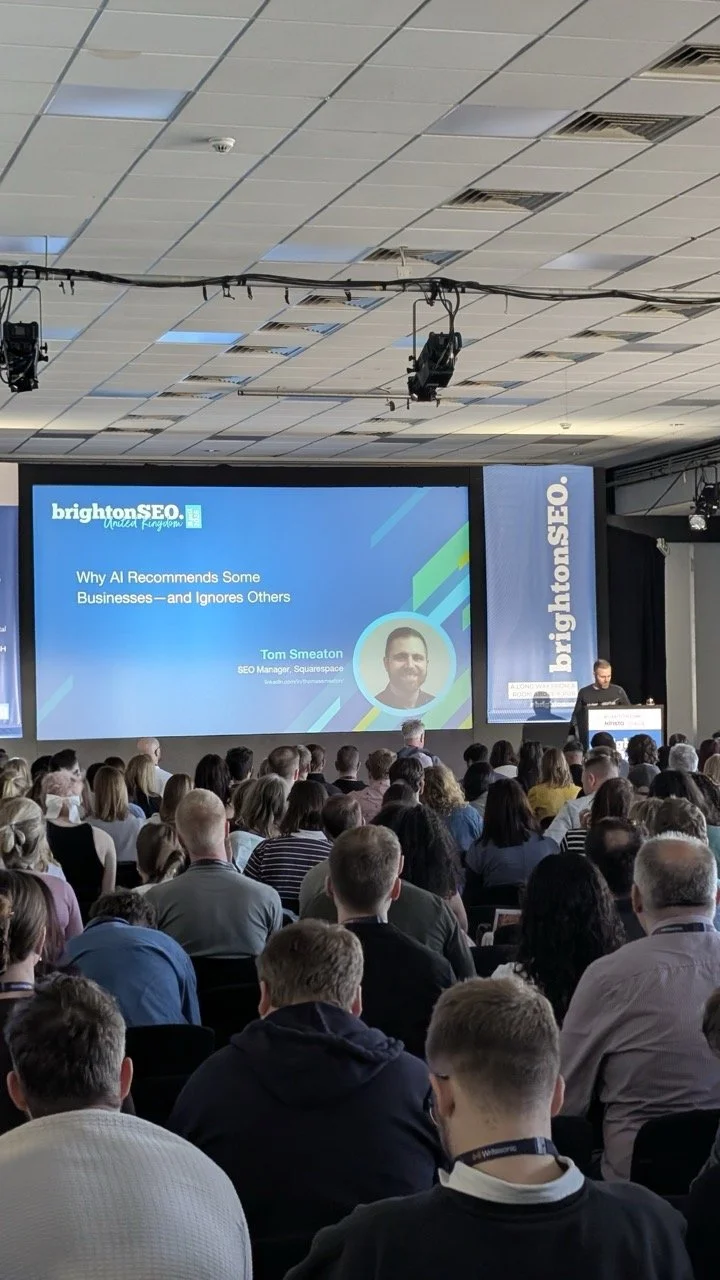
Tom Smeaton, Why AI Recommends Some Businesses and Ignores Others
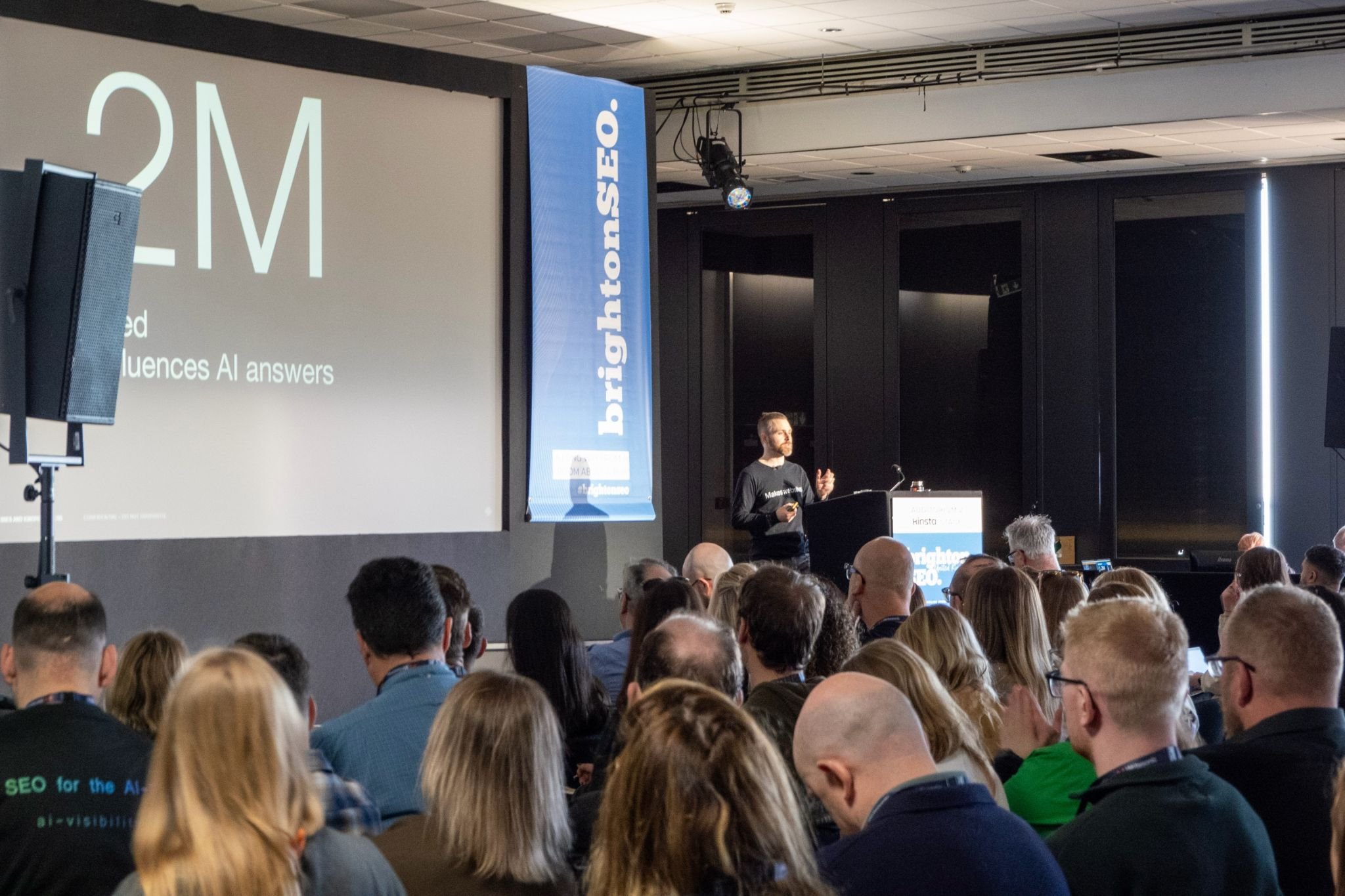
Tom is the SEO Manager at Squarespace, and this was the one I was most personally invested in. Partly because hearing the platform's own SEO lead present at BrightonSEO was a moment in itself, and partly because the title is the exact question every business owner is starting to ask out loud.
The talk had a clear four-part structure: AI search for professional services, the study, what they found, and what to do about it. (You can download the full deck from Squarespace)
The study. Squarespace partnered with Peec AI to analyse 1.2 million citations across ChatGPT, Google AI Mode and Perplexity, focused on professional services prompts across three verticals: Health & Beauty, Professional Services, and Training & Education. That's not a sample. That's a proper dataset, and the patterns it surfaced were a lot more useful than the usual "AI is changing everything" abstractions.
What they found. Three findings stood out for me:
Over 20% of citations in every category were Articles. Editorial and "best of" content is doing a serious amount of the heavy lifting in AI answers.
Over 90% of Instagram citations came from Google AI Mode. So the platform that you ignore at your peril depends entirely on the AI tool you're optimising for.
Over 33% of Perplexity citations for Professional Services were listicles. Different AI tools genuinely do reach for different source types.
The clean way Tom summarised the model differences for professional services was: ChatGPT leans on articles, Google AI Mode leans on social, Perplexity leans on listicles. That's a brilliant reframe to take back to clients. "AI search" is not one channel. It's three different channels behaving in three different ways.
It's worth being precise about what this means. Tom's dataset was scoped to professional services prompts across three verticals, and broader industry research fills in the picture across the wider web. Profound's analysis of 680 million citations found ChatGPT's single biggest source is actually Wikipedia (47.9% of its top 10), with editorial publications like Forbes and Business Insider doing much of the rest. Semrush's study of Google AI Mode found its top cited domains were LinkedIn, YouTube, Reddit, Google and Google Blog, several of which are Google-owned properties. Perplexity's defining trait, beyond format, is heavy reliance on Reddit, which accounts for nearly half (46.7%) of its top 10 citations. And Claude is worth adding to the mental model, even though it sat outside Tom's study. Independent research from Yext (Q4 2025, 17.2 million citations) found Claude cites user-generated content at two to four times the rate of competing models, with reviews and community sources doing a disproportionate amount of its work.
So Tom's reframe holds, especially in services. The deeper takeaway is that each platform has a distinct content economy, and you have to know which one you're playing in. It's also worth saying these patterns are not fixed. ChatGPT's Reddit citation rate collapsed from around 60% of responses to roughly 10% in September 2025, around the same time Google removed its num=100 search parameter. The cause is still debated, but the volatility is the point. The principle (multi-channel, source-aware) is the thing to internalise. The specific snapshot will keep changing.
The framework. Tom distilled all of it into the AI Visibility Framework for Professional Services, three steps:
Win the discovery battle. Be present in the source types AI tools reach for in your category.
Earn comparison and social mentions. When AI is asked who's best, who's better, who to choose, your name needs to appear in the conversations those answers are built from.
Make your site citation-worthy. Once AI does land on you, your site needs to give it something it can confidently cite.
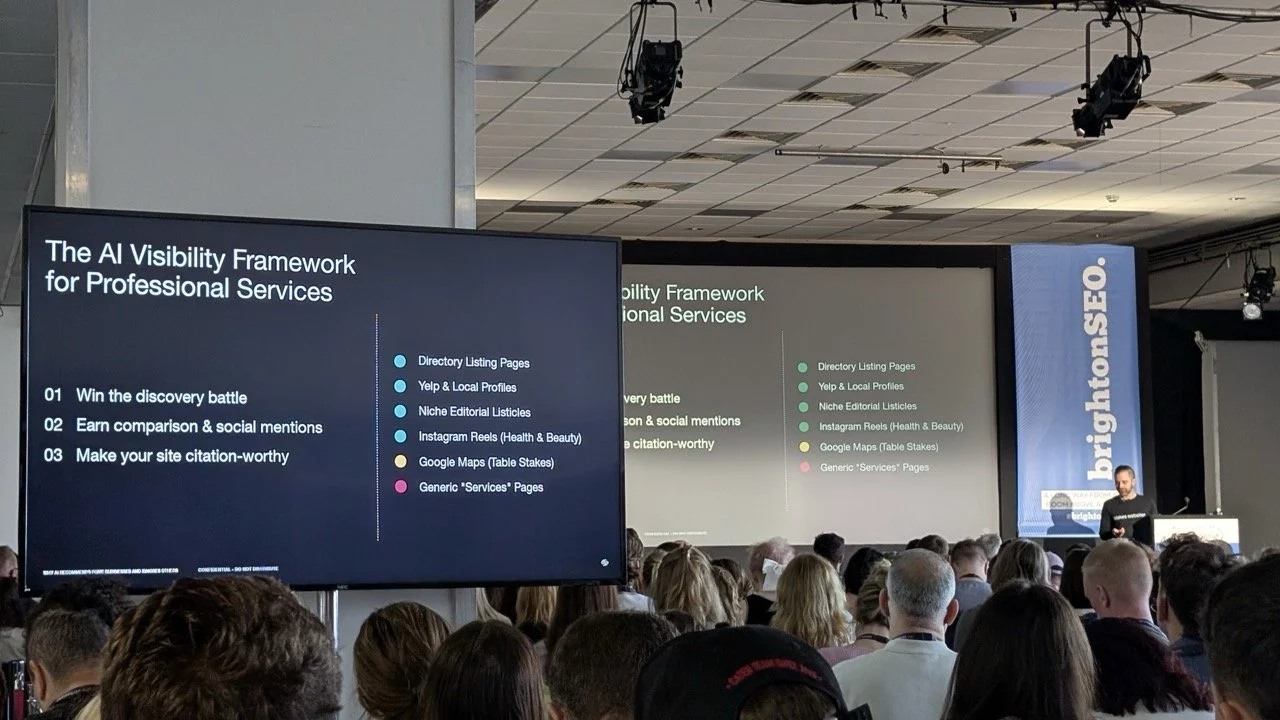
The breakdown of which sources actually drive AI citations for professional services was the part I scribbled down fastest: directory listing pages, Yelp and local profiles, niche editorial listicles, Instagram Reels (specifically for Health & Beauty), Google Maps as table stakes, and (notably called out as a warning rather than a recommendation) generic "Services" pages.
That last one is the kind of detail I'll be referencing for years. A lot of small business sites lean entirely on a single "Services" page to do their heavy lifting. Tom's data essentially says: that page on its own is not what AI tools are reaching for. You need richer, more specific, more locatable signals across the wider web.
His final slide closed it cleanly: "Your website is foundational, but services brands need presence everywhere."
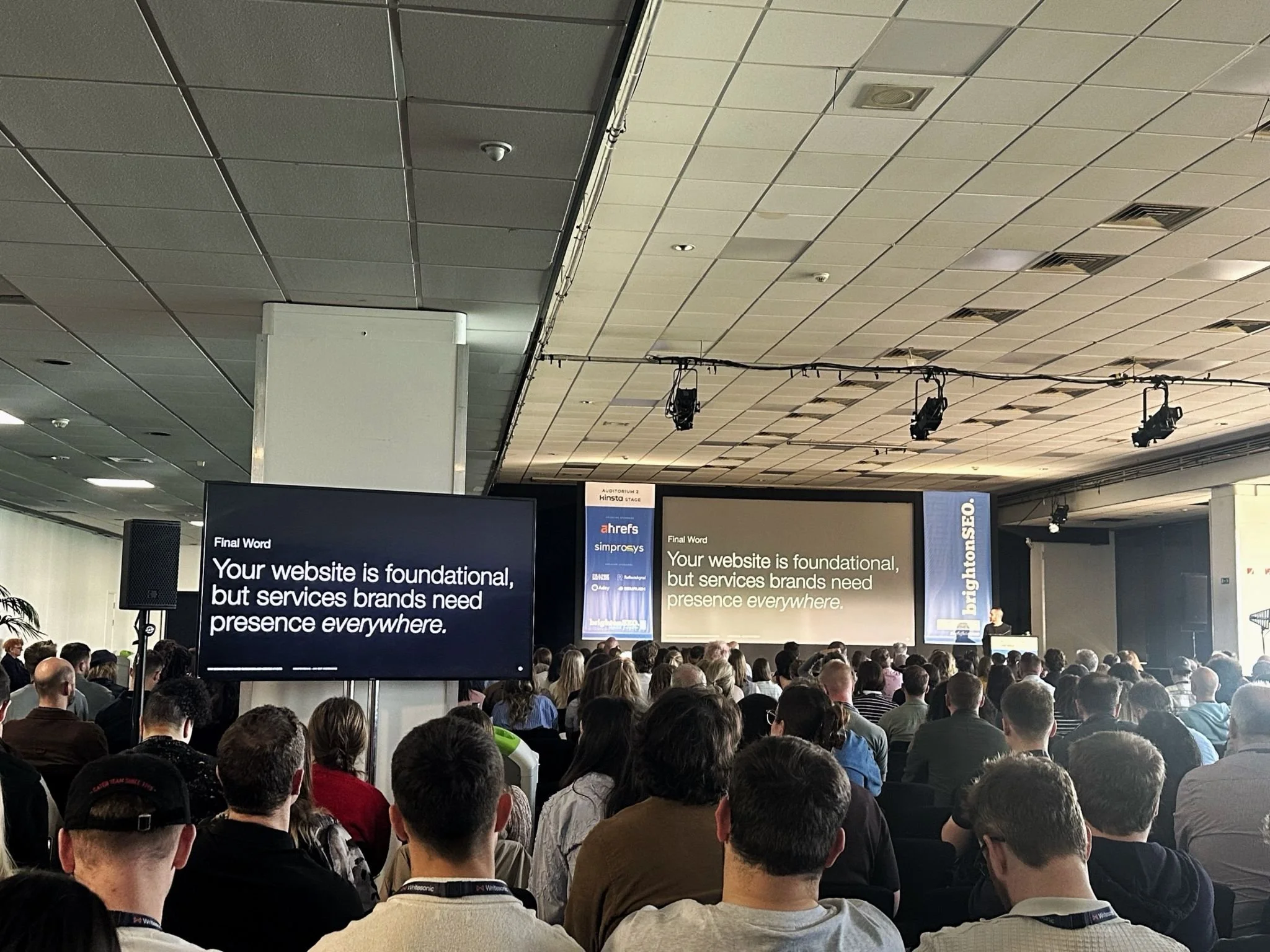
For a Squarespace designer who spends a lot of time helping clients think about where their website fits into the bigger picture, that's almost a manifesto. Your site isn't the whole strategy. It's the foundation everything else gets built on.
What I'm taking home
I left BrightonSEO genuinely energised. Two days on a stand at a conference this size could easily have flattened me, but the opposite happened. Part of that was the calibre of the conversations. Part of it was the talks I did manage to catch. And a big part of it, honestly, was getting to spend time in person with other Squarespace Circle members. Most of our community lives online, in forums and meetups and the occasional video call. Standing shoulder to shoulder with other Circle members at an event of this scale, all of us telling the same story to the same audience from slightly different angles, was a reminder of how much weight this community actually carries.
It also pushed me to level up my own SEO knowledge. Spending two days surrounded by people who think about search at the depth this crowd does, while having to articulate Squarespace's SEO story confidently to a room full of sceptics, exposed every gap in my own understanding I'd been quietly tolerating. I came home with a list of things to learn, frameworks to adopt, and a much sharper sense of how I should be talking to clients about AI search.
A few things I'm acting on this week:
Building schema properly into client sites by default, layering multiple schema.org types (Organization, LocalBusiness, Service, Person, FAQPage, BreadcrumbList) and connecting them with @id references rather than dropping in a single isolated block. The conversation with the designer at the booth told me how many people don't realise how easy this is in Squarespace. The conversation with Ahrefs told me how much more there is to do once you start.
Rewriting how I talk to clients about AI search using Tom's three-step framework. Discovery, mentions, citation-worthiness. It's clean enough to use in a proposal.
Recognising that "AI search" is multiple different channels, not one. ChatGPT, Google AI Mode, Perplexity and Claude each reward different source types, and those preferences shift quarter to quarter. The principle of treating them as separate channels matters more than any single snapshot of who cites what this month.
Pushing past the "your website is the strategy" mindset with services clients. The site is the foundation, but presence everywhere is what gets you cited.
Watching the talks I missed, starting with Dr Pete Meyers' closing keynote.
Bringing the takeaways into the next Circle London meetup.
If you're a Squarespace designer reading this and you haven't been to BrightonSEO: go. Even for a single ballot day. The platform conversation is changing in this room, and the more of us in it, the better. Squarespace have put together a dedicated landing page for everyone they met at the event with the deck, the SEO/AEO hub, and the Circle application all in one place. Worth a bookmark.
And if you haven't joined Circle yet, that's the place to start. You can sign up to Squarespace Circle here, and if you're based in or around London, come and join us at Circle London too. The in-person meetups are exactly where this kind of conversation continues between conferences.
If you're an SEO who's never quite taken Squarespace seriously: come and find the Circle stand next time.
This article was written by Dave Hawkins
Made by Dave is the Squarespace London Lead Community Partner, Circle Platinum Partner, Authorised Trainer, Marketplace Expert and Community Leader. BrightonSEO returns to the Brighton Centre on 8 to 9 October 2026.